
Every claim is sourced
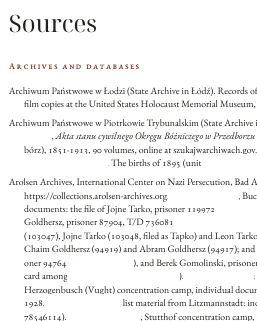
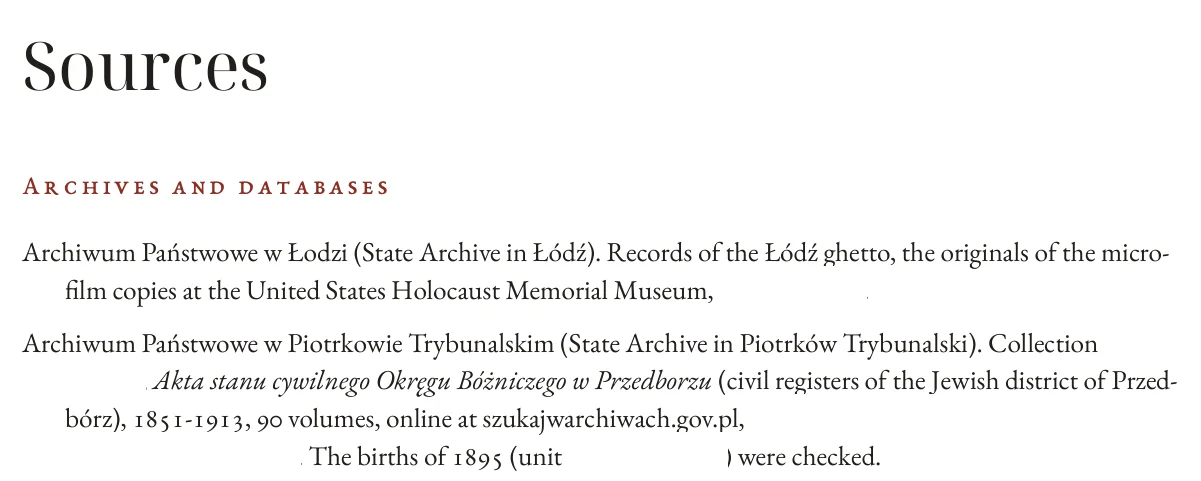
Each fact in the book is tied to a record, and the record is cited. In the example, the notes run to more than fifty pages.
Every commission follows the same steps, whether the family’s records are in a state archive in Poland or a county courthouse in Ohio. Archive, copy and translation fees are included.
We begin by listening to what the family knows and remembers, and to what you hope the book will hold. Together we agree its scope, such as which branches of the family it follows and how far back it goes, and whether it is needed by a particular date.
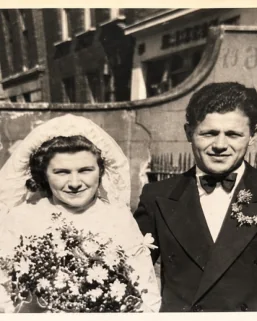
We ask for everything the family has, however small: letters, certificates, passports, photographs, a name written inside a prayer book. Every document and photograph is read and transcribed, with each name, date, place and file number noted.
What the papers say is kept apart from what relatives remember, and both point the research toward the archives that may hold more.
We search the public record collections and pull the original of every entry that matters, since an index can misread a name or a date.
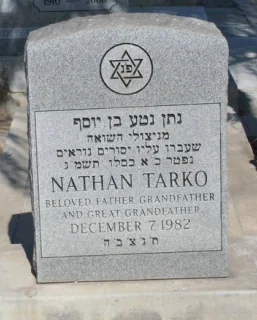
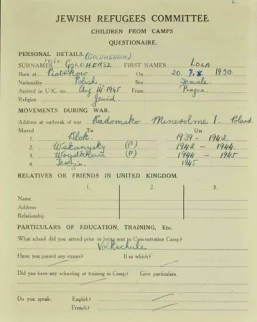
Spellings turn up as the search goes on: the same man appears as Naton on an American census, Natan on a ship’s roll, Mota on a committee’s card and Nathan on his gravestone. Each new spelling is searched in turn.
Much of what matters sits in files that were never indexed or are closed to the public. For these we write to the archive, museum or library that holds them, with a specific and personal request about one person or one kind of record. Every message and reply is logged.
Archives answer on their own schedules, and the book never waits on any one reply.
Each record is transcribed and translated in full before we decide what it means, and each identity is tested against parents, places, dates and numbers together.
In the example, an index listed an 1896 birth as Nuta Tarko; the original register reads Nuta Marko, and the identification was withdrawn. Where two records disagree, the book gives both and says which is preferred and why.
The book sets the family’s life inside the history of its town and the events around it, with every fact tied to its source. Family memory is kept apart from what the records show, so a reader always knows which is which.
Maps and family trees are drawn for the book, and each document is set beside its translation. Old photographs are restored for print, and the book is bound as a large-format hardcover in full color.
Some archives reply weeks or months after the book is delivered. What arrives is read and added to an updated edition, and any correction to the first edition is stated openly in it.
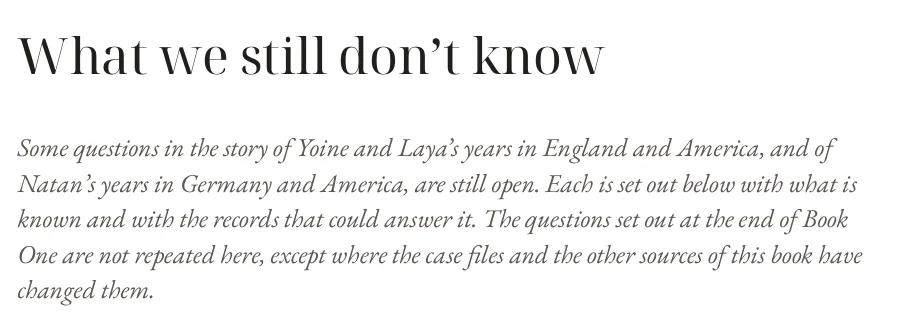
What is still unknown is set out plainly, with the records that might answer it. The two heirloom copies are bound from the updated edition.
Each fact in the book is tied to a record, and the record is cited. In the example, the notes run to more than fifty pages.
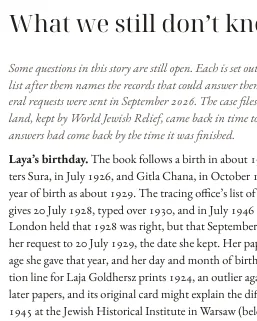
Where a record does not show something, the book says so plainly, with the records that might answer it.
When something turns out to be wrong, we withdraw it in writing and correct the next edition. In the example, a birth found through an index was withdrawn once the original register was read.
Identification withdrawn in writing.
Welfare files, medical notes and similar records are handled with care, and the family decides what is published.
Archives answer on their own schedules, and some never answer. We report what was searched and what was found.
Family papers shared with us are kept private and used only for your book.
Some books are needed by a fixed day: the shloshim, a yahrzeit, an unveiling, a milestone birthday or a family celebration. These can be taken on as priority commissions.
Within thirty days the first edition is built from the family’s papers and interviews and from the record collections that can be searched directly, and printed copies arrive in time for the date. Requests to the archives go out at once. Archives answer on their own schedules, so whatever arrives later goes into an updated edition, and the heirloom-bound copies are made from that edition. A priority fee applies.
Tell us about your family and what you would like the book to hold.