Family history book examples fall into six main kinds: a register of descendants with names and dates, a book of family tree charts, a memoir in one person's voice, a photo book with captions, a family cookbook, and a researched history that sets the family in its towns and times, with the original records and their translations. Below are examples of each, with pages from one researched history explained.
The surest way to decide what kind of book your family should have is to look at real pages. This guide sets out family history book examples of each kind, with where to find more, and then goes through one researched family history page by page: what each spread does and what it took to make. That book is the example on this site, the Tarko family history, in two volumes.
Inside a book shows the example in full, and how the example was researched traces the work behind it, from the first papers to the printed volumes.
Key points
- Most family history books are one of six kinds: a register genealogy, a family tree book, a memoir, a photo book, a cookbook or a researched history.
- Thousands of older printed family histories, most of them register genealogies, can be searched free in the FamilySearch Digital Library, and many can be read online.
- A researched family history shows its evidence: records as they were found, with translations, maps, family trees and notes that tie each fact to its source.
- The example on this site runs to two volumes of 570 pages, with 29 chapters, 23 maps and 190 photographs and documents.
- A genealogy research report answers one question for the file, while a book tells the family's story for readers.
- Whatever the kind, a book a family can trust says where each fact comes from and states what is still unknown.
The kinds of family history book
| Kind | What a page looks like | What it takes to make | What it leaves out |
|---|---|---|---|
| Register genealogy | Numbered descendants, each with dates of birth, marriage and death and a line or two of life | Years of record searching, then careful compiling | Most of the story, and often the sources |
| Family tree book | Pedigree charts and family group sheets, with photographs and a timeline | A tree built and checked against records, then laid out and printed | Anything the tree does not hold, and usually the story |
| Memoir or life story | One person's memories, in their own voice, with family photographs | Interviews or the person's own writing, then editing | Records, and anything the person did not know or remember |
| Photo book | Photographs with captions, arranged by period or by branch | Sorting, naming and restoring the photographs | Most dates and places, and anyone with no photograph |
| Family cookbook | Recipes with the story of who made each dish and when | Gathering recipes and the memories that go with them | The family's history beyond the kitchen |
| Researched family history | The family's story in its towns and times, with records, translations, maps, trees and source notes | Research in records and archives, then translation, writing and design | What the records never held, which a good book states plainly |
Register genealogies
The oldest printed family histories are registers: a founding ancestor, then each generation of descendants, numbered so that a reader can follow any line. Two numbering systems are standard in the United States. The Register system is named for The New England Historical and Genealogical Register, the journal of the New England Historic Genealogical Society, and the NGSQ system for the quarterly of the National Genealogical Society. The society's short book Numbering Your Genealogy explains both.
Thousands of these books, many from the nineteenth and early twentieth centuries, can be searched free in the FamilySearch Digital Library. The Library of Congress says its own collection holds more than 70,000 compiled genealogies. A register is a good model for a family that wants every descendant listed.
Family tree books
A family tree book is built from charts. A pedigree chart shows one person's direct ancestors, branching back across a page. A family group sheet shows one couple and their children, with dates and places for each. Printed with photographs and a short timeline, these pages make the book most people picture when they look for examples of family tree books. The best of them leave room for every spelling of each name and for a note of where each date came from. What a family history book is compares tree books with fill-in books and the other kinds.
Memoirs and life stories
A memoir is one person's account of their life, written by them or from interviews with them. Its pages read as a story, with photographs from the family's albums. Its strength is the voice. Its limit is that it holds only what the person remembers, and memory moves dates and merges places. How to write your mother's or father's life story covers the form.
Photo books
A photo-led book arranges the family's photographs by decade or by branch, with a caption under each. It is quick to make once the photographs are named and dated, and grandchildren turn to it first. The best family history photo book examples have a short text for each period and a family tree at the front. What to do with old family photos and papers shows how to name and date them.
Family cookbooks
A family cookbook keeps the recipes with the people who made them: a grandmother's Shabbos challah, or the cake every birthday had. The best ones give the story of each dish and a photograph of its cook. How to make a family cookbook explains how to gather them.
Researched family histories
A researched family history finds the records of a family, reads them in their original languages, and writes the family's story from them, set inside the history of its towns and the events of its time. Its pages hold the records themselves, with translations, maps, family trees and notes that say where each fact comes from. It takes the most work of any kind, and it is the only kind that can say, for each fact, which record supports it.
One researched family history, page by page
The example on this site follows a family from Poland to England and America between 1895 and 2008, in two large-format hardcover volumes of 570 pages in all, with 29 chapters, 23 maps and 190 photographs and documents. These spreads show the kinds of page such a book holds.
A part opening
Each part of the book opens with a full-page photograph of a place from that part of the story, here a public-domain photograph of the town's wooden synagogue. The facing page begins the chapter with the family's first record, a date and a town of birth. A researched book needs pages like this one, where the reader is given the place before the records begin.
The family trees
The two sides of the family have a tree each, set on facing pages so that a reader can see how they meet. Each person's box gives the spellings found in the records and what is known of their fate, and marks what is not known. A tree like this one is drawn last, after the research, because every box depends on a record.
A document as it was found
Records are shown as they were found, with a caption that says what each one gives. This declaration gives an address and a trade, with the date and place of his marriage. It also gives Łódź as the birthplace, which earlier records contradict, so the book uses it for what it proves and sets its birthplace beside the others.
Every document pictured in the book, in whatever language, is transcribed and translated in full in a section at the back, "The documents in English", so that a reader can follow the original line by line.
A map drawn for the book
The example has 23 maps, drawn for the book from the records: the towns a family lived in, and the roads and sea routes between them. A map turns a list of places into something a grandchild can follow, and it is often the page relatives look at longest.
Places then and now
Where a family left few photographs of a place, public collections often hold them, in archive photographs and old postcards. A researched book pairs them with the place as it looks today, so readers see both the world the family knew and the one their grandchildren can visit.
The source notes
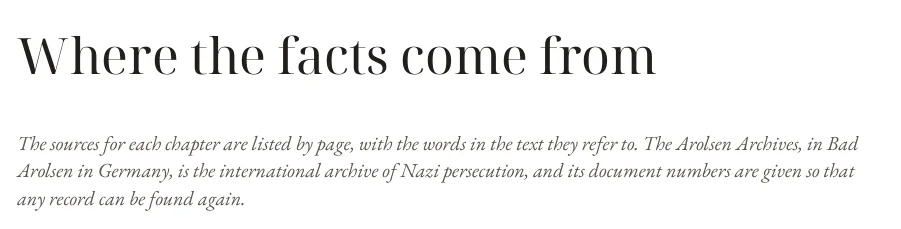
The notes are the part of a researched family history that most families never see in other books. In the example they run to more than fifty pages, listed by page and by the words in the text they support, so that any fact can be traced to its record and the record found again. The book also ends with a section that sets out what is still unknown and which records might answer it.
Genealogy research reports
A genealogist hired by the hour usually delivers a research report. It states the question the research set out to answer and lists every source searched, including those that found nothing. It gives each finding with a citation and a copy of the record, weighs the evidence, and suggests what to search next. A report is the right product when a family wants one question answered, such as where a grandfather was born. It is written for the file, and it is the raw material from which a book can later be written. What genealogists charge covers the cost of one.
How to write a genealogical research report
A report written by a family member for the family's own files follows the same order as a professional's:
- Head it with the date and the question, such as where and when a grandfather was born.
- Set down what was known at the start, including family stories, and where each piece came from.
- List every source searched, with a full citation, including the searches that found nothing.
- Give each finding with a copy or a transcription of the record.
- Weigh the evidence: whether each record is an original or a later copy, and whether it answers the question directly.
- State the conclusion and how firm it is, and list what to search next.
The FamilySearch blog's guide to writing yourself a research report walks through one, and a report kept this way makes the next search, or a later book, much quicker to begin.
What makes a family history book good
Whatever the kind, the books that families keep and trust share the same marks. Use them as a checklist when you look at any example:
Checklist
- Every fact can be traced to a source, and the sources are listed.
- Records are shown, with transcriptions and translations, so readers can check them.
- Family memory is kept apart from what the records show, and both are valued.
- Where records disagree, the book says so and explains its choice.
- What is unknown is stated plainly, with the records that might answer it.
- Maps and trees let a reader find their way without reading every page.
Choosing a model for your own family
Start with what the family has and what it wants the book to do. These steps turn the examples above into a plan:
- Decide who the book is for, such as the grandchildren now or readers fifty years from now.
- List what the family already holds: photographs, recipes, letters, certificates, a tree, or a parent who can still tell the stories.
- Pick the example closest to what you hold, and note what that kind leaves out.
- Decide how far back the book should go. Living memory reaches the grandparents, and anything earlier has to come from the records.
- Decide who will do the work, and whether there is a date the book is needed by.
Many families end up with more than one kind: a cookbook for the grandchildren and a researched history for the shelf. A family that wants to know where it came from, or needs records for a citizenship application, needs research before anything is written. What a family history book is, and which kind fits helps decide, and how to write a family history book gives a chapter outline for a family writing its own.
Sources: the FamilySearch Digital Library and its help pages on access; the Library of Congress collections policy for genealogy; the National Genealogical Society, Numbering Your Genealogy; the FamilySearch blog, on research reports; the Allen County Public Library, on its books online; the example's own captions and notes. Checked October 2026.
Questions families ask
Where can I see examples of family history books?
The FamilySearch Digital Library holds thousands of older printed family histories, most of them register genealogies, and many can be read online free. The Library of Congress and the Allen County Public Library in Fort Wayne keep large collections, cataloged by surname. Inside a book on this site shows one researched family history page by page, in two volumes.
What does a professionally researched family history book look like?
It reads as a story, chapter by chapter, and it shows its evidence: records as they were found, with transcriptions and translations, maps, family trees, and notes that tie each fact to its source. The example on this site is a large-format hardcover in full color, with a section at the back that sets out what is still unknown.
What should a family history book include?
At least a family tree, the story of each generation, photographs with names and dates, and a list of sources. A researched book adds the records themselves with translations, maps of the places, the family's towns and times, and a plain statement of what is still unknown. A short book can leave out the maps; it should never leave out the sources.
Where can I find a sample family history book to follow?
For a register genealogy, borrow the format of one in the FamilySearch Digital Library, or the numbering systems of the New England Historic Genealogical Society and the National Genealogical Society. For a researched history, the example on this site shows the structure: part openings, chapters, documents with translations, maps, trees and notes.
Are there family history book examples as a PDF?
Many older printed family histories can be read online free. The Allen County Public Library has put public-domain books from its collection online with FamilySearch and the Internet Archive. Whether a book can be read online depends on its copyright, and some can be seen only at a FamilySearch center or affiliate library. Pages from the example are shown on Inside a book.
How long is a family history book?
It depends on the kind. A photo book or a cookbook is often under 100 pages. A researched family history is longer: a Zichronos book typically runs 150 to 300 pages, and the example on this site, which follows a family across three countries and more than a century, takes two volumes of 570 pages in all.
What is the difference between a genealogy book and a family history book?
A genealogy book lists people and their relationships, generation by generation, with dates. A family history book tells the family's story, with the people set in their places and times. Many good books do both, with a tree and a register at the front and the story in the chapters.
Where to go from here
Most of the kinds above can be made at home, apart from the parts that need records from archives abroad and their languages. A researched book carries a family further, because it finds the records behind the family's stories and ties each fact to its source. Every Zichronos book is researched to the original records and finished as a large-format hardcover, and most commissions take three to four months. How the example was researched shows the work behind these pages, what a family history book costs compares the kinds of service, and How we work sets out the eight steps.